Daphne Wright - Films
Daphne Wright - Films
Films
Daphne Wright
-
![Close-up of a white marble sculpture's face, showing the nose and lips.]()
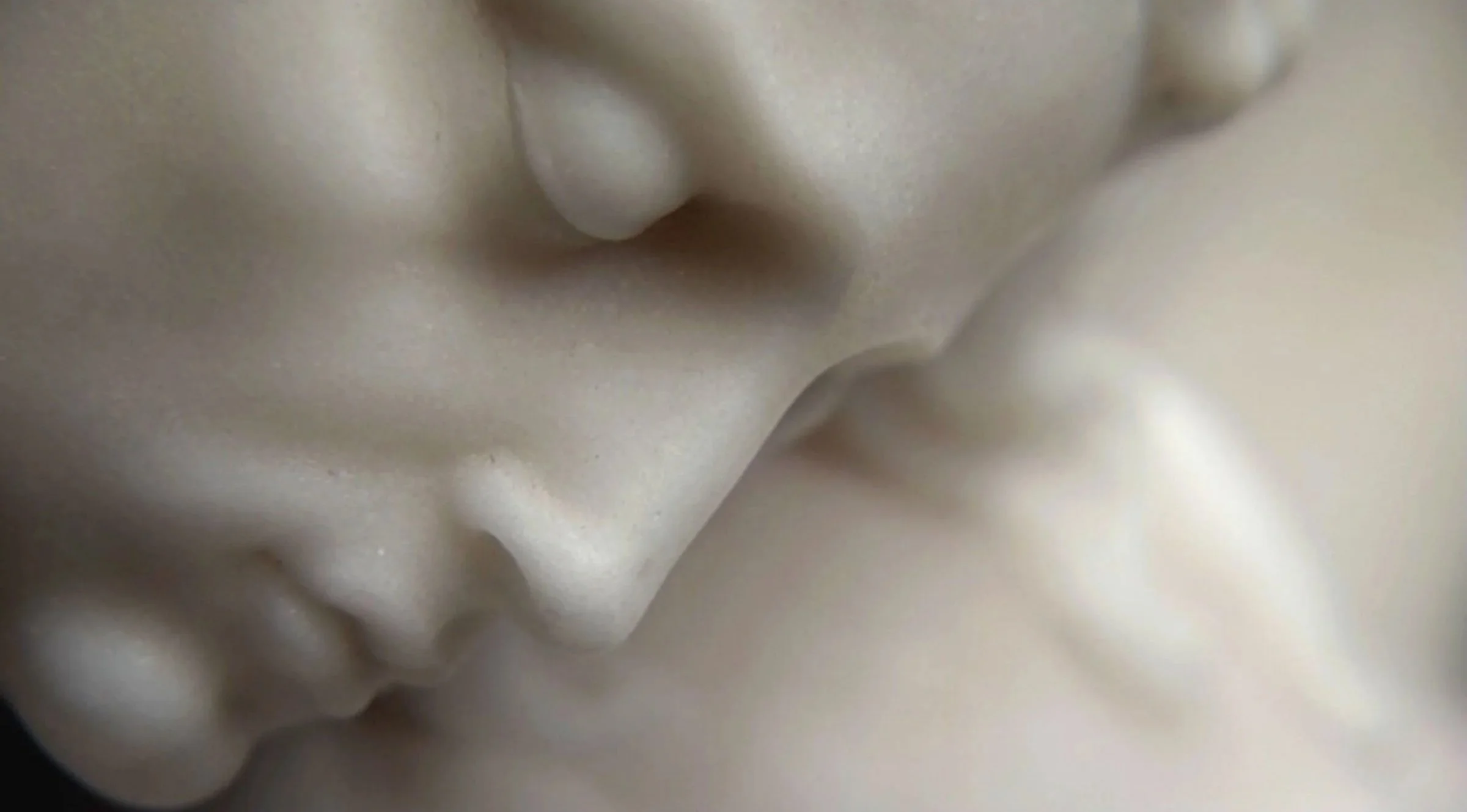
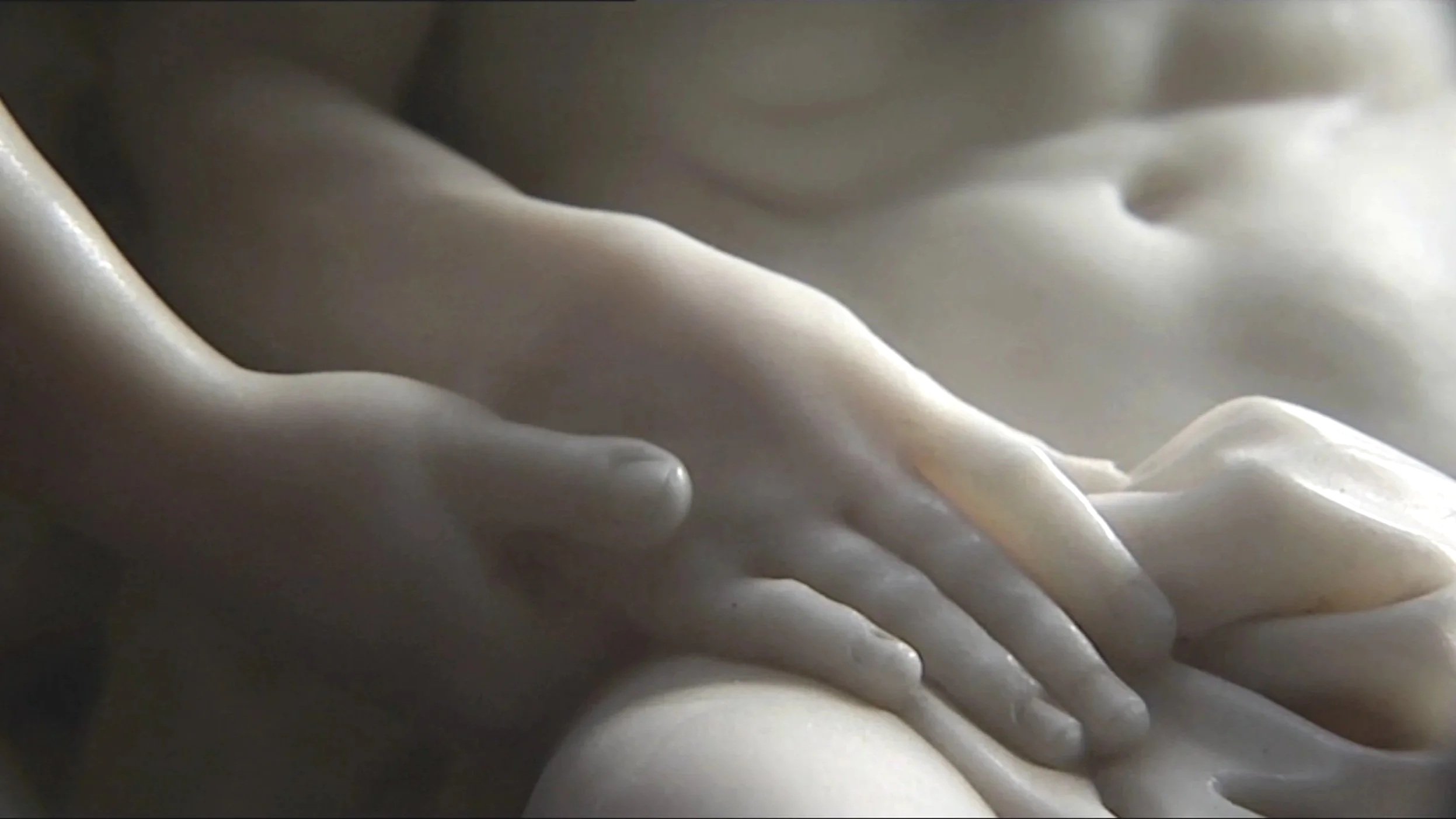
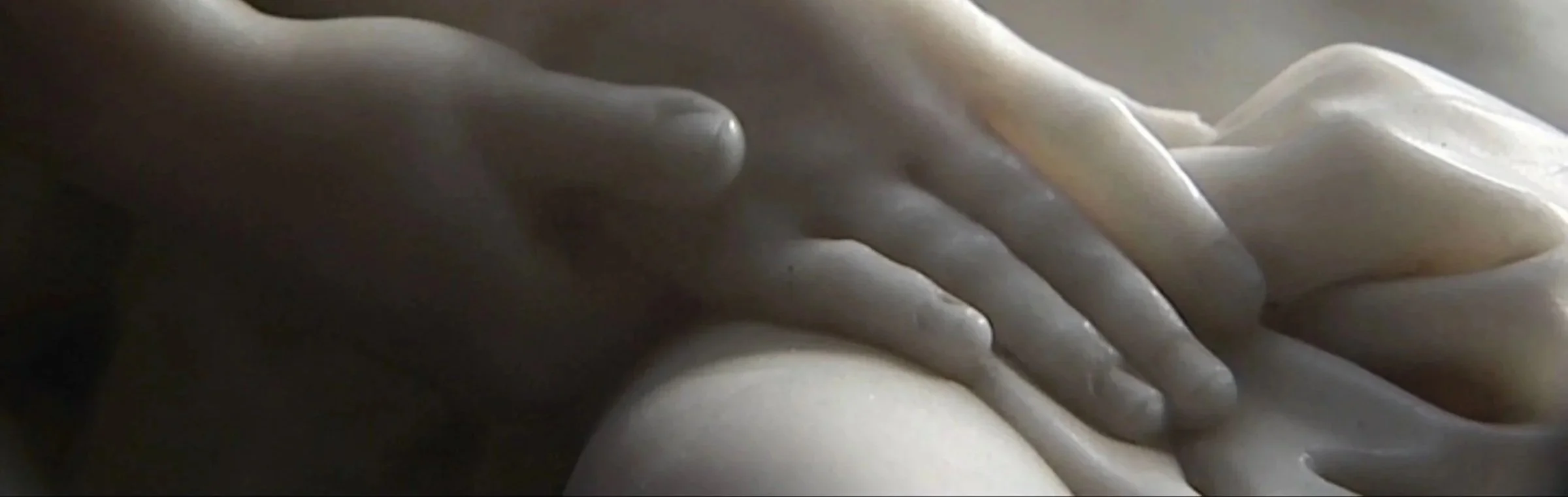
Plura, 2009 - 5m 30s
In Plura the camera moves slowly across the surface of a classical statue carved in marble. From time to time a hand, cheek or thigh move into the frame. The imagery is accompanied by a soundtrack of male and female voices; guttural and indistinct sounds which seem to struggle with language and the recollection of specific forms and meanings – the beginnings of words, the start of sentences, conversations, and relationships imbue the figures with an emotive connection and function to shift the classical bodies from cold stone to an intimate and human composition. The viewer is frustrated from seeing the sculpture, of Diana embracing the sleeping Endymion, in its entirety.
Credits:
Camera – John Podpadec
Film editing – Mino De Francesca and Daphne Wright.
Sound editing – Nathan Ng and Daphne Wright.
Collection South Tipperary Arts Service, Commission, 2008-2009
Diana and Endymion (1952) by Giuseppe Plura filmed at The Holburne Museum, Bath
-
![Song of Songs poignantly investigates the relationships of care adults have with more vulnerable family members]()
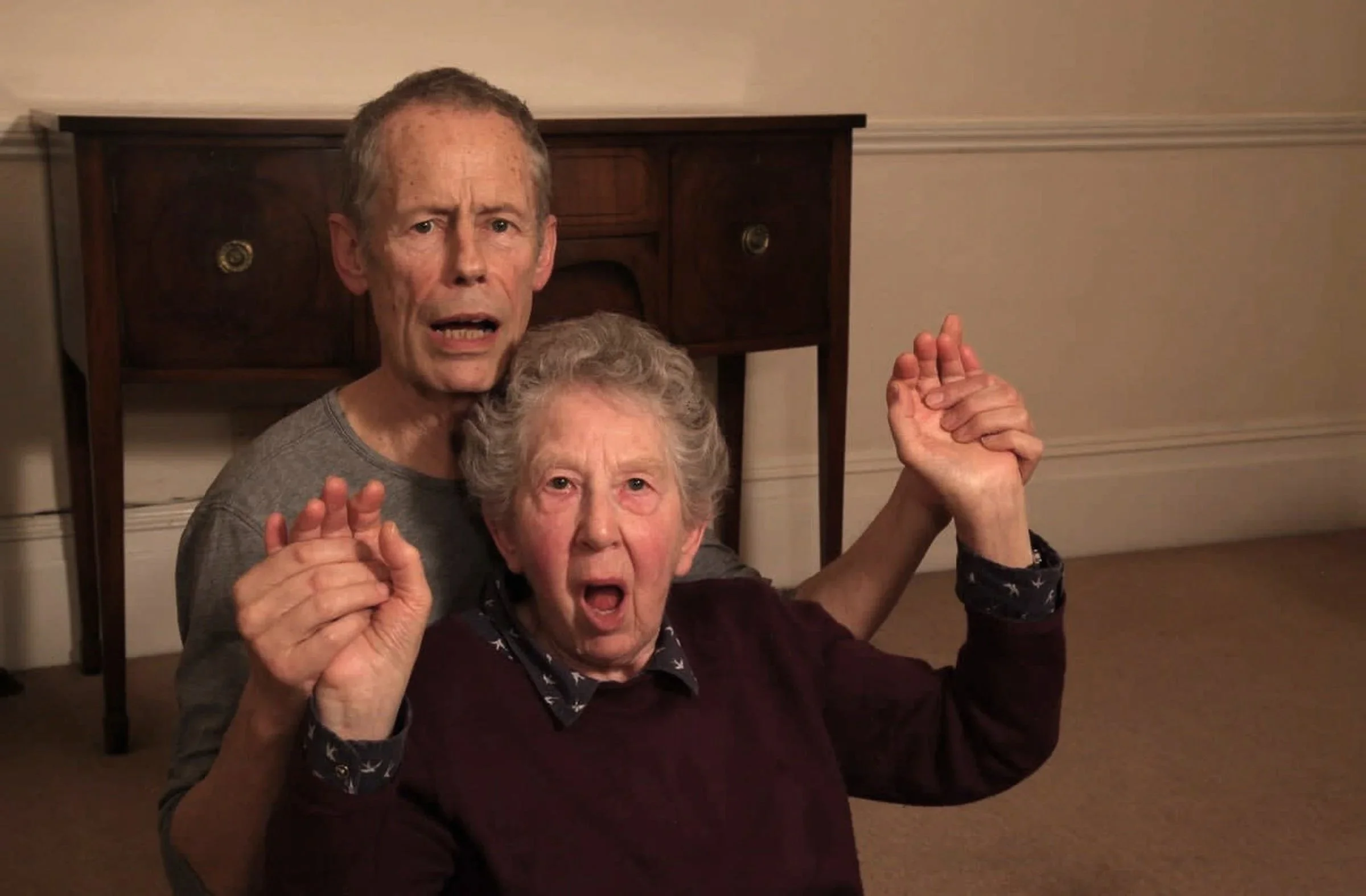
Song of Songs, 2019 - 6m 34s
Song of Songs poignantly investigates the relationships between adults with their more vulnerable family members.
A man holds the hands of an elderly woman in a pose taken from a lovers’ death scene in opera. The power struggle between the actors is palpable as they sing a kind of elemental duet exploring love, jealousy and death. The woman chews and creates dissonant sounds not familiar coming from an older person – all the time, the male figure aids and accepts her noises and movements.
The artist wishes to acknowledge and thank:
Pameli Benham – Actor
Alan Coveney – Actor
Mino de Francesca – Video Production -
![An elderly man with glasses and a light purple shirt looks confused or skeptical, sitting indoors near a window with trees in the background.]()
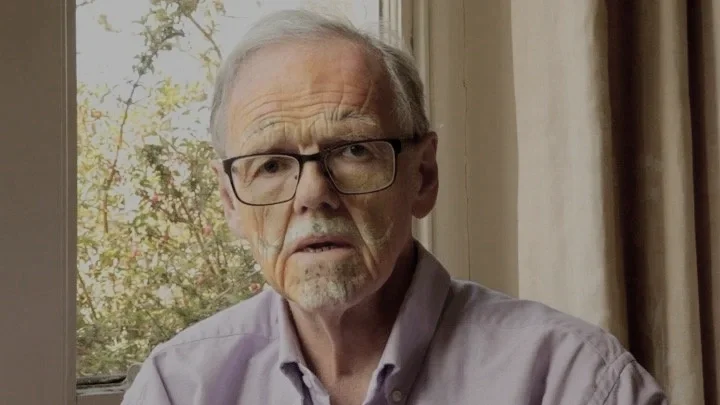
Is Everyone OK?, 2019 - 6m 54s
In the video Is everyone ok? we see an older man in poor health with his face brightly painted like a lion who bears the mental scars of a career spent in middle management.
Calling out team-building clichés, he intersperses these with personal responses to queries about the health of a loved one. The effect is unsettling as he resides at the interface between work and retirement, usefulness and redundancy.
The artist wishes to acknowledge and thank:
Bob Havard – Actor
Mino de Francesca – Video Production -
![An elderly woman with short, curly gray hair wearing a pale-colored collared shirt.]()
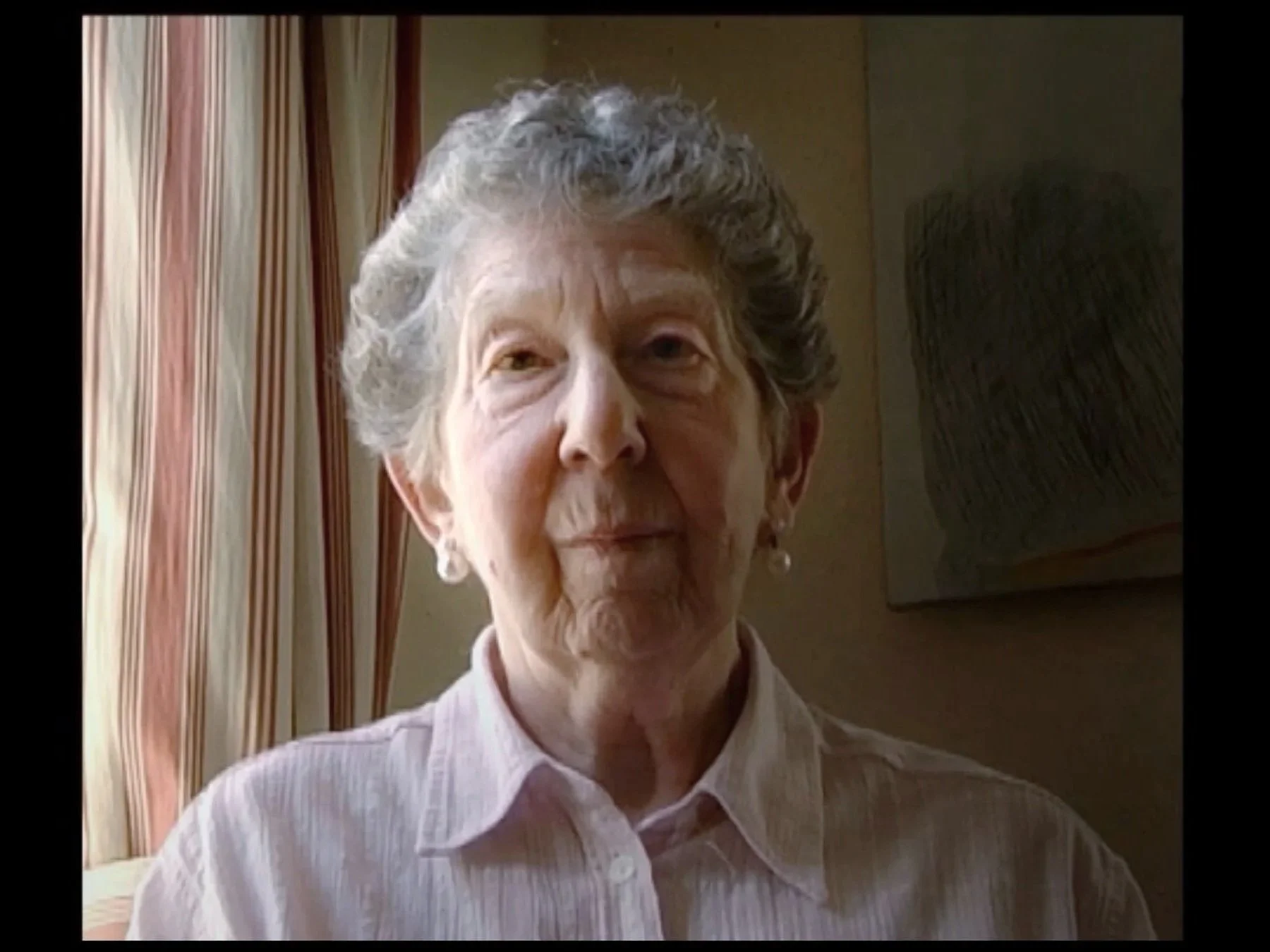
I know what it’s like, 2012 - 6m
The film consists of an elderly woman’s performance of six disrupted statements to camera: it is a haunting evocation of memory, heartache and isolation. Wright’s research for this work led her to examine the representation of motherhood, guilt, love and vengeance in literature, theatre and art.
The Medea, for example (a painting of which hangs in Elizabeth Dysart’s private closet at Ham House) is a Greek tragedy that tell the story of a woman who, betrayed by her husband, seeks revenge by killing her own children. The layered script has two main components; the first is based on Shakespeare’s Lady Macbeth speech in which she goads her husband to murder, and the second is abstracted speech. The phonic sounds evoke the acquisition of letter sounds taught in schools or the gradual deterioration of language abilities such as repetition, digression and withdrawal associated with Alzheimer’s. The final moments of the film heighten our discomfort further.
“I Know What It’s Like evokes feelings of heartache and isolation. The artist uses soliloquy – a device whereby a character speaks to him or herself out loud. By giving voice to her thoughts and feelings, the subject in the work also shares them with the onlooker.
The artist wishes to acknowledge and thank the actor Pameli Benham
“The theatrical monologue in this haunting film reveals unspoken inner reflections. The elderly lady on screen begins to describe the experience of breastfeeding her child. The emotive subject and initial use of tender language falls away, as the tone and phrasing reveals a lifetime of motherly guilt. Wright again examines the subject of the family, making reference to the ancient Greek tragedy ‘Medea’ and Macbeth by William Shakespeare. The phonic sounds evoke both the learning of letters taught in schools and the gradual deterioration of language ability, for example the repetition, digression and withdrawal associated with Alzheimer’s disease.” - Josephine Lanyon
-
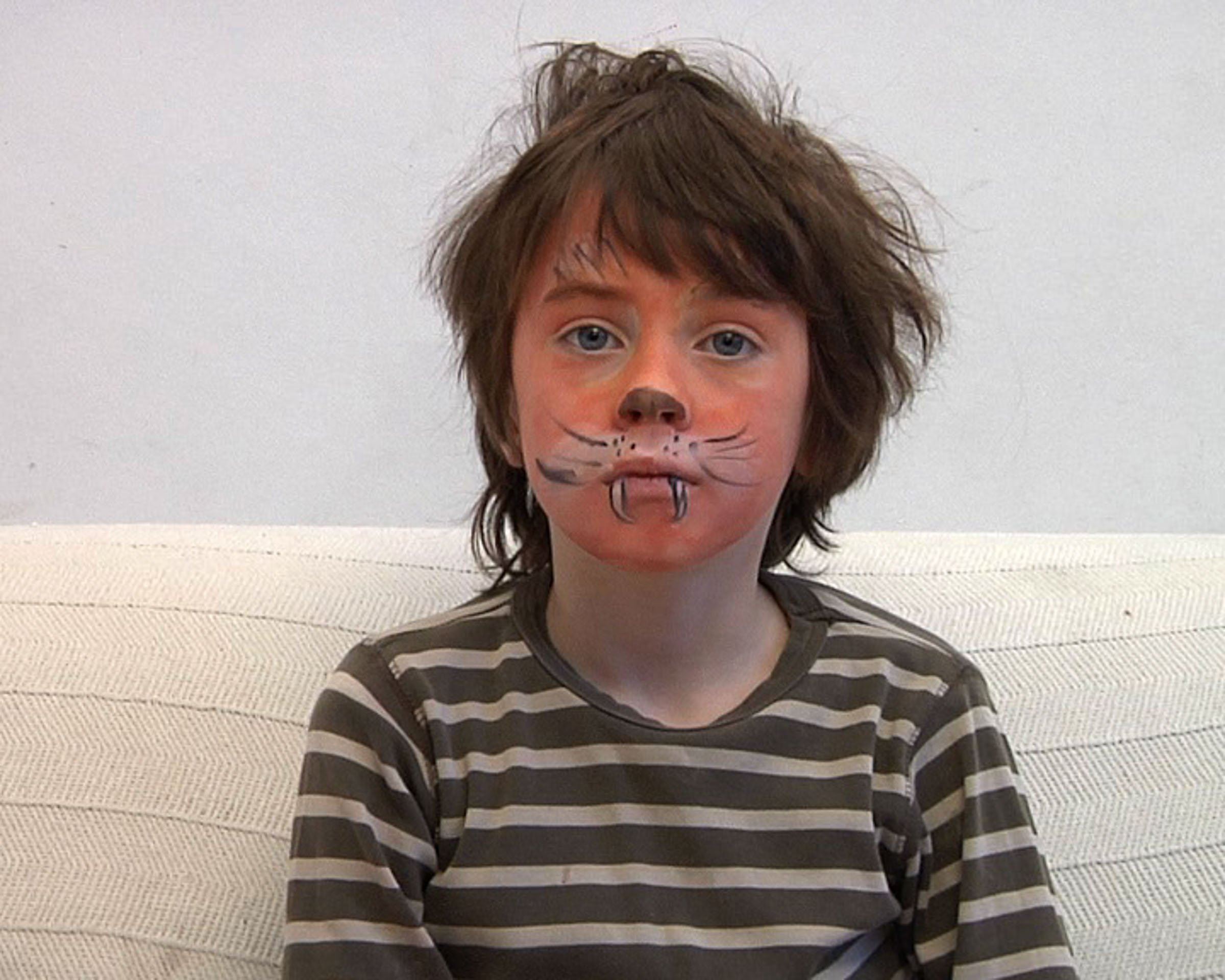
![A young boy with face paint resembling a cat, wearing a striped T-shirt, sitting on a beige couch with a plain white wall in the background.]()
If you Broke Me, 2014 - 4m
This and, ‘I am the Beginning’ depict a solitary young boy, each of their heads life-sized and framed by a box monitor, speaking in riddles to the camera. Each boy speaks directly and unblinkingly to the camera/viewer, with a face painted like a tiger (If You Broke Me) and with a beard (I am the Beginning). The riddles are taken from common children’s books, but with the monotony of each boys voice, and with each of their unblinking stares, a heightened tension is created. The riddles take on new meanings beyond those of simple childhood rhymes and logic puzzles.
-
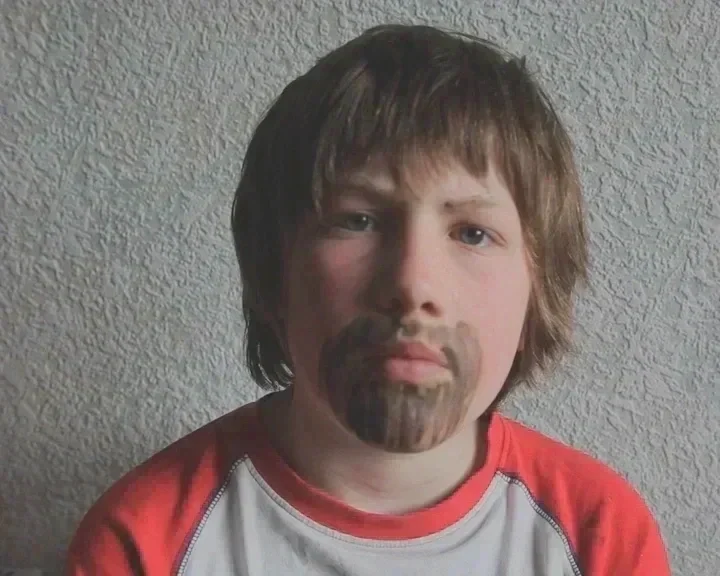
![A young man with medium-length brown hair, a painted beard, and mustache, wearing a red and gray shirt, standing against a textured wall.]()
I am the Beginning, 2014 - 4m
This and, ‘If you Broke Me' depict a solitary young boy, each of their heads life-sized and framed by a box monitor, speaking in riddles to the camera. Each boy speaks directly and unblinkingly to the camera/viewer, with a face painted like a tiger (If You Broke Me) and with a beard (I am the Beginning). The riddles are taken from common children’s books, but with the monotony of each boys voice, and with each of their unblinking stares, a heightened tension is created. The riddles take on new meanings beyond those of simple childhood rhymes and logic puzzles.
-
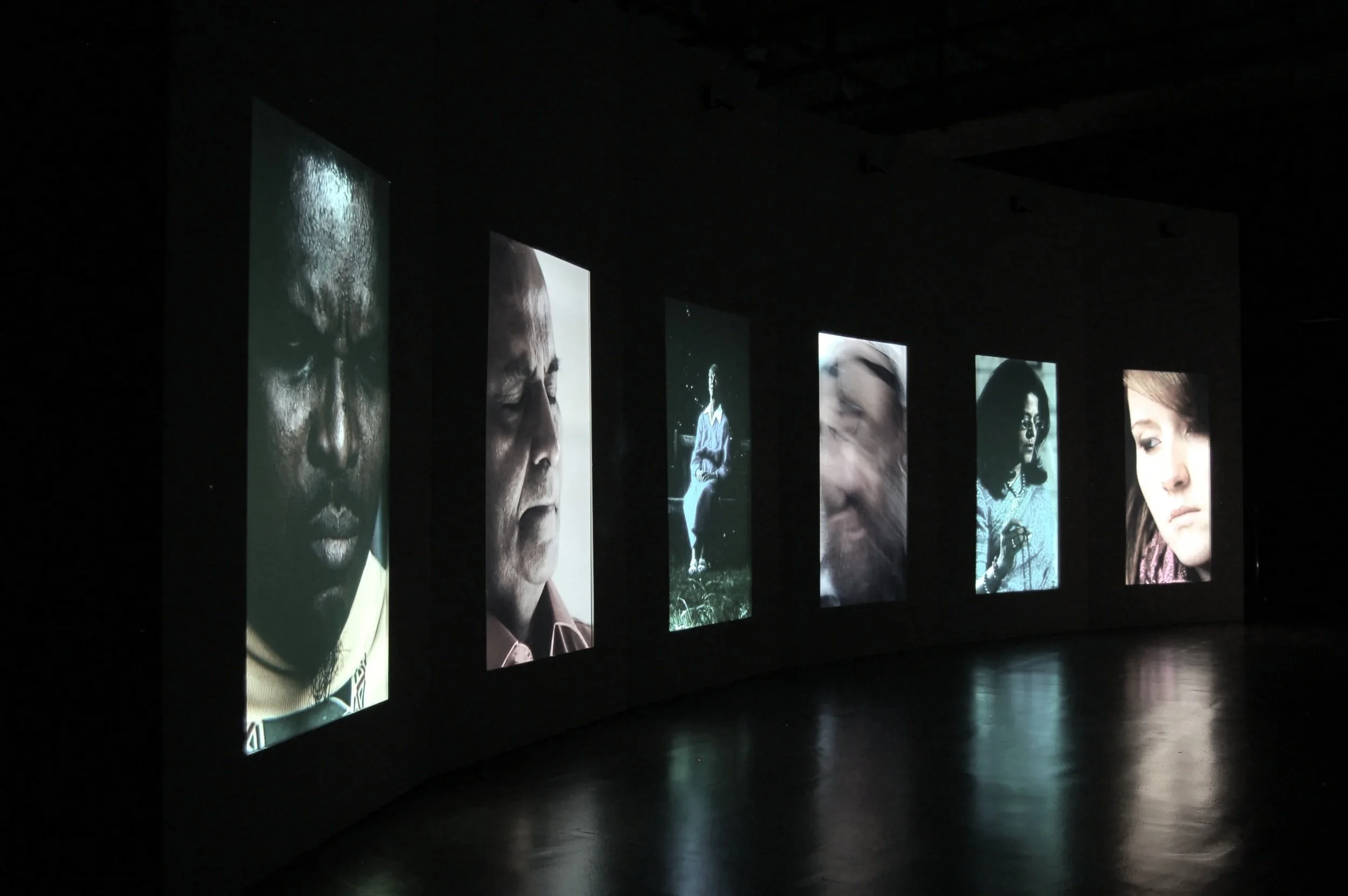
![A digital art installation with seven large vertical screens displaying black-and-white portraits of different people's faces inside a dark room.]()
Prayer Project, 2009 - 33m 18s
Prayer Project is a moving image installation that explores the private and personal ritual of prayer and meditation. The multi-screen project brings together film portraits of individuals in the act of prayer and meditation. The work explores the desire to convey a very personal human communication with a variety of belief systems and examines our perception of the connection between the mortal and spiritual worlds.
The project focuses on the human presence in the process of the act of prayer, further exploring the relationship between visible and transcendent states and the connection an individual has with something ‘other’, considering the intensely personal act of private prayer.
Co-commissioned by Picture This and QUAD and produced by Picture This.
Funded by Esmée Fairbairn Foundation and Culture Ireland.
-
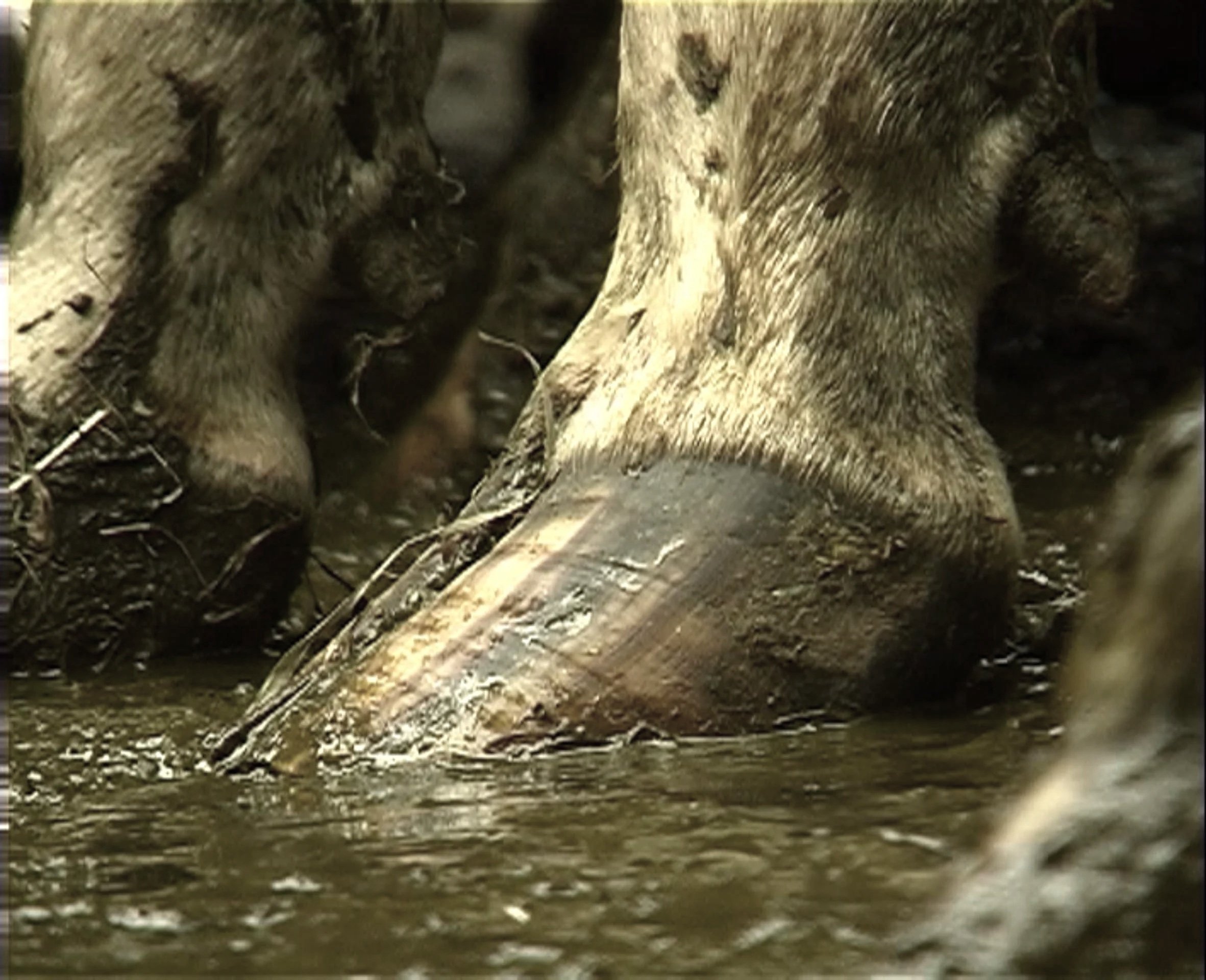
![Close-up of a moose's large snout and hooves in a shallow creek.]()
Sires
A short video shows only the legs and hooves of a herd of cattle in the milking parlour. Mired in wet mud, they are reminiscent of troops trudging through hostile territory. The image vividly portrays something of the seemingly coarse and mechanical world of modern farming.